Why does water make things darker? The truth about light, reflection, and what you really see
Discover why your clothes, sand, and stones look darker when wet. The answer involves light physics, diffuse vs. specular reflection, and how your brain interprets what you see.
Why does water make things darker? The truth about light, reflection, and what you really see
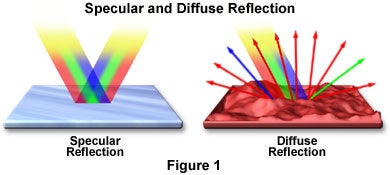
The direct answer: water doesn’t “darken” — it changes how light is reflected by the surface. When something is dry, the rough surface scatters light in all directions (diffuse reflection), which makes it appear lighter. When wet, water fills the microscopic irregularities, creating a smoother surface that reflects light directionally (specular reflection) — and less light returns to your eyes, so it appears darker.
When I realized this for the first time — that “darkening” is actually about less light reaching my eyes, not about the color changing — my brain did that typical click of “how did I never think of this?”. Like, you spend your whole life seeing wet t-shirts get darker, beach sand darken when waves pass, stones shine when it rains… and never stop to think about why.
And that’s what I need to write about. Because understanding the physics behind this everyday illusion reveals how light works, how surfaces interact with it, and — even cooler — why some things don’t darken when wet (like glass or polished metal).

The trick is in reflection (not absorption)
Here’s the first key concept: when you “see” something, what really happens is light hitting the object and being reflected back to your eyes.
The color you perceive depends on:
- Which wavelengths are absorbed (stay in the material)
- Which are reflected (reach your eyes)
- How this light is reflected (diffuse or specular)
Most people think wetting something changes light absorption — like, water “sucks” more light, so it gets darker. But that’s not quite it.
Water doesn’t absorb much more light than air. The trick is in how light is reflected.
Let me explain with two types of reflection:
Diffuse reflection (rough surface)
Imagine a dry t-shirt seen under a microscope. The surface is full of irregularities — fibers at different heights, tiny holes, irregular texture. When light hits this:
- Light rays hit at different angles
- Each micro-surface reflects in a different direction
- Light scatters in all directions
- Result: Lots of light returns to your eyes, appears light
This is called diffuse reflection or Lambertian scattering. That’s why matte surfaces (paper, fabric, sand) appear light — they throw light everywhere, including your direction.
Specular reflection (smooth surface)
Now wet the t-shirt. Water fills the spaces between fibers, creating a smoother layer. When light hits this:
- Surface acts almost like a mirror (not perfect, but smoother)
- Light reflects at a specific angle (angle of incidence = angle of reflection)
- If you’re not at that specific angle, less light reaches your eyes
- Result: Less light returns to you, appears darker
It’s specular reflection — what mirrors do. That’s why wet surfaces have that characteristic “shine” at certain angles — it’s light reflecting directionally.
Refractive index comes into play
But there’s more physics happening here — and it involves a property called refractive index (symbol: n).
Refractive index measures “how much light slows down when passing through a material”. In vacuum, light travels at ~300,000 km/s. In other media, it slows down a bit.
Some values:
- Air:
n ≈ 1.00(almost equal to vacuum) - Water:
n ≈ 1.33 - Glass:
n ≈ 1.5 - Fabric/paper/sand:
n ≈ 1.5-1.6(varies, but generally higher than water)
Now look at what happens:
Dry fabric:
Air (n=1.00) → Fabric (n=1.5) → Air (n=1.00)Large refractive index difference at interfaces (air-fabric and fabric-air). This causes lots of reflection at micro-surfaces. Light bounces around a lot, scatters in all directions = appears light.
Wet fabric:
Air (n=1.00) → Water (n=1.33) → Fabric (n=1.5) → Water (n=1.33) → Air (n=1.00)Water fills the spaces. Now the index difference between water and fabric is smaller (1.33 vs 1.5). Less internal reflection, light penetrates deeper into the fabric before reflecting.
And here’s the kicker: since light penetrates deeper, it has more chances to be absorbed by the fibers. Less light reflected back = appears darker.
So actually, water isn’t “darkening” — it’s facilitating more light to be absorbed by the material itself, because it reduces internal reflections that would normally “bounce” the light back.
Why wet sand is darker
The same principle applies to beach sand. You’ve noticed that:
- Dry sand: Light color, almost white/yellowish
- Wet sand: Darker color, brown/grayish
Same physics at play:
Dry sand: Each grain has micro-irregularities. Air between grains has n=1.0, quartz grains have n≈1.54. High contrast = lots of diffuse reflection = scattered light = appears light.
Wet sand: Water (n=1.33) fills spaces between grains. Lower index contrast = less reflection at interfaces = light penetrates deeper = more absorption = appears darker.
And there’s more: wet sand is compacted, so it has fewer air pockets. Air is an excellent “reflector” (air-quartz interface has high contrast). Without air, less reflection, darker.
Visual comparison:
| Material | Dry | Wet | Why? |
|---|---|---|---|
| T-shirt | Light | Dark | Dry fibers scatter light; wet ones reflect specularly |
| Sand | Light | Dark | Air between grains reflects a lot; water reduces index contrast |
| Stone | Matte | Shiny and dark | Microscopic roughness smoothed by water |
| Asphalt | Medium gray | Dark gray | Pores filled, less diffuse reflection |
| Wood | Natural tone | Darker tone | Fibers absorb more light with water facilitating penetration |
Exceptions: things that don’t darken (or even lighten)
Here’s where it gets interesting — not everything darkens when wet. Some materials behave differently:
1. Glass
Wet glass doesn’t appear darker. Why?
Because glass is already smooth — so adding water doesn’t change specular reflection much. Also, refractive indices of glass (n≈1.5) and water (n≈1.33) are close, so the water-glass interface reflects little.
Actually, wet glass can appear even more transparent — because water fills micro-scratches on the surface, reducing scattering.
2. Polished metal
Polished metals (stainless steel, silver, aluminum) already do specular reflection when dry. Wetting doesn’t change much — they continue reflecting light specularly.
But matte or oxidized metals can appear darker when wet, for the same reason as fabrics: water smooths the rough surface.
3. Glossy plastic
Plastic with glossy finish (like phone case) doesn’t darken much when wet. It’s already smooth, already reflects specularly.
But matte plastic? Darkens, for the same reasons as fabric.
4. Human skin
Your wet skin gets a tiny bit darker — but the effect is subtle. Skin has layers of natural oil that already act somewhat like “optical lubricant,” reducing scattering.
The complete physics (for detail lovers)
Let’s go deeper. What really happens at the microscopic level involves:
Fresnel’s Law
Fresnel equations describe how much light is reflected vs. transmitted at an interface between two media. The greater the refractive index difference, the more reflection.
For non-polarized light at normal incidence (perpendicular to surface):
R = ((n₁ - n₂) / (n₁ + n₂))²Where R is reflectance (fraction of light reflected).
Example:
Air-fabric interface:
R = ((1.0 - 1.5) / (1.0 + 1.5))²
  = (-0.5 / 2.5)²
  = 0.04 = 4% reflection per interface
Water-fabric interface:
R = ((1.33 - 1.5) / (1.33 + 1.5))²
  = (-0.17 / 2.83)²
  = 0.0036 = 0.36% reflection per interface
Less internal reflection → light penetrates deeper → more absorption → appears darker.
Mie vs. Rayleigh scattering
On rough surfaces, light interacts with irregularities of size comparable to wavelength (Mie scattering) or smaller (Rayleigh). This creates diffuse scattering.
Water “smooths” these irregularities, reducing scattering — thus, less light returns to your eyes.
Questions I had (and the answers)
“If water doesn’t absorb much light, why is the ocean blue?”
Water absorbs very little visible light — but absorbs much more red than blue. At great depths, red light is absorbed first, leaving blue/green. But that’s direct absorption, not the reflection effect we’re discussing here.
“Why do white clothes get darker than black clothes when wet?”
Actually, both darken — but the contrast is more noticeable on white. A dry white t-shirt reflects ~80-90% of light; wet, it drops to ~40-50%. A dry black one reflects ~5%; wet, drops to ~2-3%. Both “darken,” but you notice it more on white.
“Wet paper becomes transparent — why?”
Paper is made of cellulose fibers with lots of air between them. Air (n=1.0) vs. cellulose (n≈1.5) = high contrast = lots of scattering = opaque paper. Water (n=1.33) fills air spaces, reducing contrast — light passes through without scattering as much = paper becomes translucent.
“Can you calculate how much something will darken?”
Theoretically yes, using Fresnel equations, Mie scattering, and material absorption. In practice, real surfaces are too complex — they have multi-scale roughness, variable porosity, non-uniform absorption. Physicists use Monte Carlo simulations to estimate.
“Why does wet hair get darker?”
Same reason: dry hair strands have cuticles (microscopic scales) that scatter light diffusely. Wet, water smooths these cuticles, reducing scattering — less reflected light = appears darker. That’s also why wet hair “sticks” more — smoothed cuticles have less friction.
Final thoughts (and why this fascinates me)
There’s something poetically satisfying about understanding that “dark” and “light” aren’t absolute properties — they’re your brain’s interpretations based on how much light reaches your eyes. The same t-shirt, with the same molecules, can appear light or dark depending on having a microscopic layer of water on the surface.
It’s all about interfaces. Transitions between media. Refractive index differences. Reflection vs. absorption. Things happening on scales smaller than a hair strand, but completely changing what you perceive.
And this applies to everything. Why are clouds white? Diffuse scattering of water droplets. Why is the sky blue? Rayleigh scattering (preferential for short wavelengths). Why do mirrors reflect? Free electrons in metals oscillating with incident light.
Light is an electromagnetic wave traveling through space, hitting atoms, being absorbed, re-emitted, scattered, refracted — and your brain takes this chaos of photons and turns it into “oh, my t-shirt is wet”.
When you understand the physics behind it, the world gets more interesting. You look at a rain puddle reflecting the sky and think: “there’s a classic case of specular reflection at air-water interface with variable incidence angle creating near-perfect mirroring”. (Ok, maybe only I think that. But more people should.)
And there’s something humbling in it too — realizing that your perception of “dark” vs. “light” is just a neurological interpretation of quantities of photons per second reaching your retinas. It’s not absolute truth. It’s relative phenomenon. And yet, your brain constructs a coherent, functional model of the world from this limited information.
The physics of light is the physics of how you see. And that’s fundamentally about how you interact with the universe.
💡 Summary in 3 points:
- Water doesn’t “darken” — changes how light is reflected → dry surfaces do diffuse reflection (scattered light = appears light); wet ones do specular reflection (directional light = less reaches your eyes = appears dark).
- Refractive index explains the effect → water (
n=1.33) reduces contrast between air (n=1.0) and material (n≈1.5), facilitating light penetration and absorption by material. - Not everything darkens when wet → glass, polished metal, and glossy plastic are already smooth (specular reflection even dry), so water doesn’t change appearance much.
Enjoyed understanding how light and perception work? This post connects with the article “Why is the sky blue?” — where I explain Rayleigh scattering, why sunsets are red, and how the atmosphere acts as a giant optical filter.
References:
-
NASA Science: Light and Color science.nasa.gov
- HECHT, Eugene. Optics. 5th ed. Pearson, 2016.
-
Physics Classroom: Reflection of Light physicsclassroom.com
- FEYNMAN, Richard P. QED: The Strange Theory of Light and Matter. Princeton University Press, 2006.
-
HyperPhysics: Reflection and Refraction hyperphysics.phy-astr.gsu.edu
Personal note: Got curious about super-repellent materials — like those sportswear fabrics that “don’t get wet”. How do they work? Must have hydrophobic coating that prevents water from spreading uniformly, maintaining diffuse reflection even wet. Or is it lotus effect (superhydrophobicity through nano-scale roughness)? Investigate for future post.