Why are fossils rare? The extreme conditions needed to become stone
Understand why fossilization is so rare: it needs rapid death, immediate burial, absence of oxygen and millions of years. Explore amber, ice and the treasures of Lagerstätten.
Fossilization isn’t the default — it’s the miracle
Why are fossils rare?
Because fossilization requires extremely specific conditions — and most living beings simply rot, get eaten, or decompose before becoming fossils.
You need: rapid death + immediate burial + absence of oxygen + millions of years + luck.
If any of these fail, it won’t fossilize.
Estimate: less than 1% of all species that ever existed left fossils. Every fossil we find is a statistical miracle.
And when I understood this, I realized that the history of life we know is just a tiny fragment — an incomplete “snapshot” of billions of years.

The default: death → decomposition → disappearance
When an animal dies in nature, what normally happens?
- Scavengers eat it (vultures, hyenas, insects)
- Bacteria decompose what’s left
- Bones fragment with rain, wind, trampling
- Completely disappears in weeks/months
This is the natural cycle. Fossil is the exception, not the rule.
To fossilize, you need to interrupt this cycle immediately.
The necessary conditions (classic fossilization)
The most common form of fossilization is permineralization (mineral replacement). It works like this:
1. Rapid death
Ideal: drowning, burial by landslide, volcanic ash, sandstorm.
The animal needs to die and be removed from the decomposition cycle quickly.
2. Immediate burial
Before scavengers or bacteria do their work, the body needs to be covered by sediments (mud, sand, ash).
The faster, the better.
3. Absence of oxygen
Bacteria that decompose organic matter need oxygen. If the body is buried in an anoxic environment (without O₂), decomposition slows dramatically.
Lake bottoms, swamps, and deep seas are ideal.
4. Mineralization
Over time (millions of years), water rich in minerals (like silica, calcite, pyrite) infiltrates bones and tissues, replacing organic matter with minerals.
The result: bone becomes stone.

Variations: other forms of fossilization
Permineralization isn’t the only way. There are rarer and sometimes more spectacular forms:
Amber (inclusion in resin)
How it works:
- Insect gets trapped in tree resin (like natural glue)
- Resin hardens and fossilizes becoming amber
- Perfect preservation — even hairs, antennae, and wings intact
Why it’s rare:
- Needs forest with resin-producing trees
- Resin needs to fossilize (not dissolve)
- Sometimes preserves DNA!
Famous examples:
- 100-million-year-old mosquitoes (Cretaceous)
- Ants, spiders, even small lizards

Ice (freezing)
How it works:
- Animal dies and is quickly frozen
- Ice preserves soft tissues (skin, hair, muscles, even blood)
Why it’s rare:
- Needs extremely cold climate
- Ice needs to last thousands/millions of years without melting
Famous examples:
- Siberian mammoths (preserved 10,000-40,000 years ago)
- Some so well preserved that scientists managed to clone cells
Tar/asphalt (La Brea Tar Pits)
How it works:
- Animal falls into tar pit (natural asphalt)
- Gets stuck, dies, sinks
- Tar waterproofs and preserves
Famous examples:
- La Brea (Los Angeles) — saber-toothed tigers, dire wolves, mammoths
Molds and impressions
How it works:
- Organism leaves “mold” in mud/sand
- Body disappears, but shape remains
- Sediment hardens becoming rock
Examples:
- Dinosaur footprints (entire pathways preserved!)
- Impressions of leaves, feathers, skin
Coprolites (fossilized poop!)
How it works:
- Feces mineralize
- Preserve information about diet and ecosystem
Why it’s useful:
- Reveals what the animal ate
- Shows parasites, seeds, prey bones
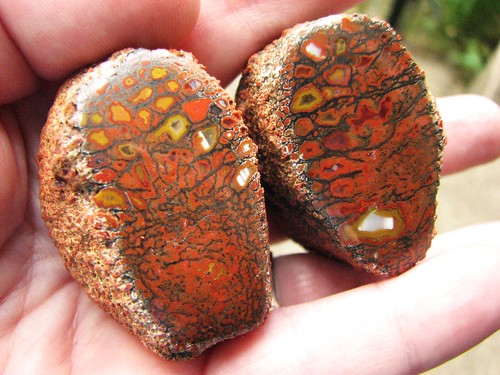
Why do we know so much about dinosaurs if fossils are rare?
Good question. If fossilization is so rare, how do we have so many dinosaur fossils?
Answer: Volume compensated for rarity.
- Dinosaurs dominated Earth for 165 million years (Triassic to Cretaceous)
- Gigantic populations
- Varied environments (deserts, rivers, swamps, coasts)
- Even with a very low fossilization rate (say, 0.001%), 165 million years generate many fossils
But still: it’s estimated we know less than 1% of dinosaur species that existed.
Paleontology’s treasures: Lagerstätten
Sometimes nature gives us a gift: places where preservation is absurdly good.
Scientists call these Lagerstätten (German word meaning “storage location”).
What are they?
Paleontological sites where exceptional conditions preserved fossils with incredible details — sometimes including soft tissues, internal organs, skin, feathers.
Why do they happen?
Rare combination of factors:
- Total absence of oxygen (anoxia)
- Ultra-rapid burial (volcanic ash, landslides)
- Specific soil pH (prevents dissolution)
- Microbial sealing (biofilms protect the body)
World-famous examples:
Burgess Shale (Canada)
- Cambrian (~508 million years ago)
- Preserves soft-bodied animals (jellyfish, worms)
- Revolutionized our understanding of the “Cambrian explosion”
Solnhofen (Germany)
- Jurassic (~150 million years ago)
- Where they found Archaeopteryx (first “feathered dinosaur”)
- Preserves dragonflies, pterosaurs, even soft tissues
Santana Formation (Brazil, Ceará!)
- Cretaceous (~110 million years ago)
- Fish with gills, muscles, and stomachs preserved
- Fossilization happened in hours after death
Yixian (China)
- Cretaceous (~125 million years ago)
- Feathered dinosaurs perfectly preserved
- Changed everything we knew about bird origins
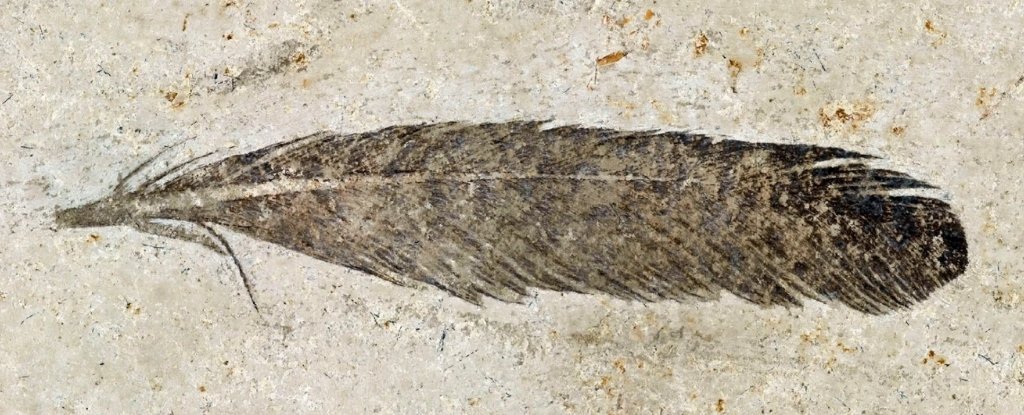
These sites are pure gold for paleontologists — because they show not just skeletons, but how animals really were.
Questions I had (and the answers)
“Why don’t we find fossils of all dinosaurs?”
Because most didn’t fossilize. Only those that died in specific conditions survived. It’s like trying to reconstruct a city’s history using only photos — you see fragments, not everything.
“Do fossils turn into stone?”
More or less. The original bone is replaced by minerals over millions of years. The result is rock with the shape of the bone. But sometimes part of the original bone survives.
“Can you extract DNA from fossils?”
Rarely. DNA degrades quickly (thousands of years). We’ve managed from frozen mammoths (10,000-40,000 years), but from dinosaurs (65+ million years)? Impossible with current technology. Jurassic Park is fiction.
“Where are there the most fossils in the world?”
Depends on the era. For dinosaurs: Morrison Formation (USA), Gobi Desert (Mongolia), Hell Creek (USA). For marine fossils: Burgess Shale, Santana (Brazil).
“Why are there footprint fossils but not of the animal?”
Because footprints are easier to fossilize than bodies. Step in mud → mud hardens → becomes rock. The animal keeps walking, dies elsewhere, rots. Footprint survives.
Why this fascinates me
Because every fossil is a statistical miracle.
Think about the world’s most famous T-Rex, Sue (at the Field Museum, Chicago). For her to exist as a fossil:
- She died in a place with fine sediment
- Was buried quickly (before rotting)
- Stayed in an oxygen-free environment for millions of years
- Wasn’t destroyed by earthquakes, erosion, or tectonic movements
- Someone found her 67 million years later
The chances of this? Absurdly low.
And yet, there she is. And we can look at her skull and imagine what she was like.
Every fossil is a window to the past — but the window is small, foggy, and only shows a tiny piece of the story.
And this doesn’t frustrate me. It makes me even more fascinated by what we manage to discover.
💡 Summary in 3 points:
- Fossils are rare because fossilization requires rapid death, immediate burial, absence of oxygen, and millions of years
- There are variations (amber, ice, tar, molds) with even more specific conditions
- Lagerstätten are sites of exceptional preservation where even soft tissues are preserved
Enjoyed understanding why fossils are so special? I wrote about other scientific mysteries. Check out the post about What is the center of the universe? — it’s about how even seemingly simple questions have surprising answers.
References:
-
Wikipedia: Lagerstätte en.wikipedia.org
-
NPS: Lagerstätten in National Parks nps.gov
-
Cambridge Core: Fossil Lagerstätten cambridge.org
-
FossilEra: What is a Lagerstätte? fossilera.com
Personal note: I want to study more about taphonomy (the science of fossilization) and how scientists can determine the exact age of fossils using radiometric dating. Also about the debates surrounding “soft tissues” supposedly found in dinosaur fossils — there’s real scientific controversy there. That’s for another post.