Why were dinosaurs so big? The biology behind the giants
Discover why dinosaurs could reach colossal sizes: efficient air sacs, hollow bones, more oxygen in the atmosphere and evolutionary advantages. Understand why modern mammals don't come close.
Dinosaurs were big because they could be
Why were dinosaurs so big?
Because a perfect combination of biology and environment allowed it.
Dinosaurs had:
- Ultra-efficient respiratory system (air sacs)
- Hollow but resistant bones
- Continuous growth throughout life
And lived in a world with:
- More oxygen in the atmosphere (~30% vs 21% today)
- Hot and globally stable climate
- Abundance of giant plants
Result: Being big had evolutionary advantages — fewer predators, reaching high food, storing energy. And they could sustain giant bodies.
When I understood this, I realized dinosaurs weren’t “monsters” — they were perfectly adapted to their world.
The secret respiratory system: air sacs
Here’s the secret that allowed dinosaurs to become gigantic.
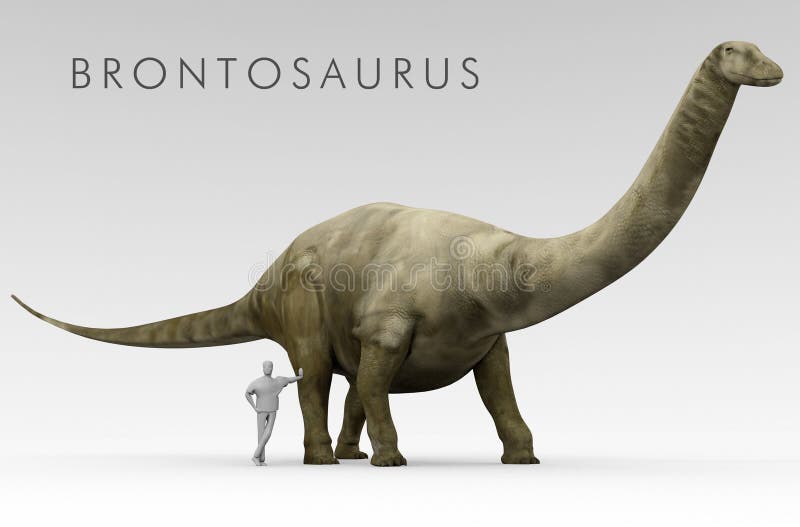
Dinosaurs (especially sauropods — the giant long-necked ones) had air sacs connected to their lungs.
How do air sacs work?
Imagine your lungs. When you inhale, air enters. When you exhale, air exits. Bidirectional flow.
Now imagine bird (and dinosaur) lungs:
- You inhale → air enters air sacs AND lungs
- You exhale → air from sacs passes through lungs again
Result: Air always passing through lungs, in continuous flow.
More oxygen extracted per breath = more energy available = can sustain larger body.
[IMAGE: Diagram comparing mammal lung vs dinosaur/bird lung with air sacs]
Bonus: natural refrigeration
Air sacs weren’t just for breathing — they were a cooling system.
In the Mesozoic (dinosaur era), climate was much hotter than today. No polar ice caps. Elevated global temperatures.
A giant animal generates lots of metabolic heat. Needs to dissipate it.
Air sacs spread throughout the body (even inside bones!) helped cool internally — like biological air conditioning.
That’s why dinosaurs could be active even in hot climates — while mammals stayed small and nocturnal for 150 million years.
Hollow bones: lightness with strength
Another genius trick: pneumatic bones (filled with air).
How does it work?
Giant dinosaur bones were hollow inside, with a lattice structure (like bridge beams).
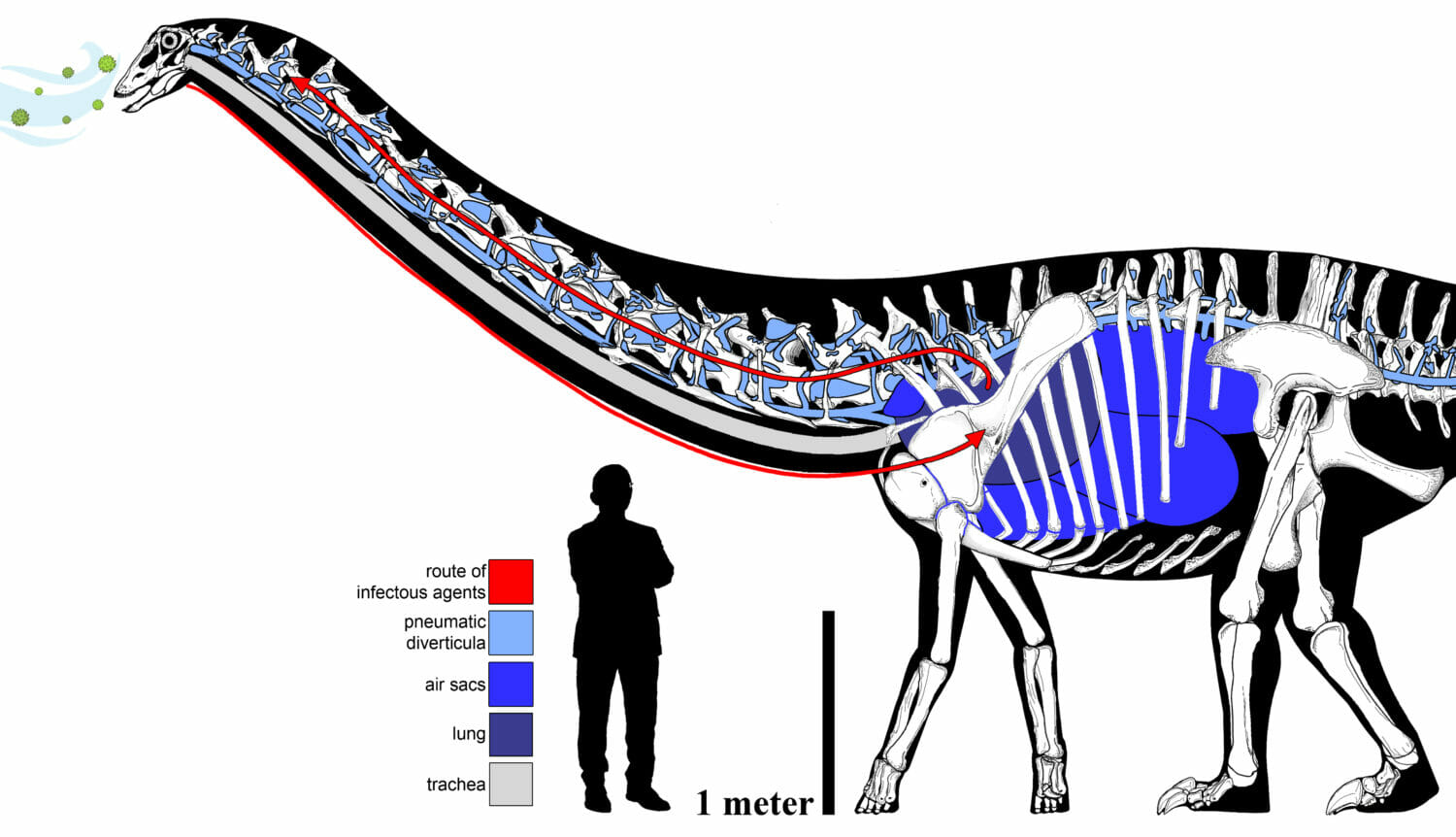
Advantages:
- Reduces weight without sacrificing strength
- Air sacs invade bones, creating air chambers
- Lattice structure distributes forces efficiently
Practical result:
A sauropod like Argentinosaurus:
- Weighed ~80-100 tons
- But skeleton was relatively light
- If it had solid bones like mammals? Would be too heavy to move
Hollow bones allowed gigantism without collapsing under own weight.
The Mesozoic world: perfect environment for giants
Biology allowed — but the environment favored.
1. More oxygen in the atmosphere
In the Jurassic and Cretaceous, atmosphere had ~30% oxygen.
Today? 21%.
More O₂ = more efficient respiration = metabolism can sustain larger body.
2. Hot and stable climate
The Mesozoic was globally hot:
- No polar ice caps
- Shallow seas covered continents
- Stable year-round temperatures
Dinosaurs were probably mesothermic — between cold-blooded (reptiles) and warm-blooded (mammals/birds).
Stable climate = less energy spent on thermoregulation = can invest energy in growth.
3. Abundance of giant plants
Jurassic/Cretaceous had:
- Giant conifers
- Tree ferns
- Ginkgos
- Cycads
Lots of available food = can sustain giant herbivores = can sustain giant carnivores that eat herbivores.
The entire food chain scaled up.
Evolutionary advantages of being big
Okay, they could be big. But why was being big advantageous?
1. Defense against predators
If you’re a 50-ton adult sauropod, who’s going to attack you?
Even a T-Rex (~9 tons) would think twice.
Gigantism = natural protection.
2. Reaching high food
Sauropods had absurdly long necks.
Why? To reach leaves at the top of trees — where other herbivores couldn’t reach.
Less competition = more food.
3. Thermoregulation
Large bodies lose heat more slowly than small bodies (surface/volume ratio).
In hot climate, this helps maintain stable internal temperature without spending too much energy.
4. Energy storage
Large body = more fat/energy reserves.
Useful for periods of scarcity (droughts, seasonal changes).
Continuous growth: the longer you live, the bigger you get
Unlike mammals (which stop growing upon reaching maturity), many dinosaurs grew throughout their lives.
This means:
- Argentinosaurus hatchling? Small (relatively)
- Young adult? Medium
- Old adult? Gigantic
The longer they lived, the bigger they got.
[IMAGE: Timeline showing sauropod growth from hatching to adult]
Combined with efficient respiratory system and light bones, this allowed reaching absurd sizes.
Examples of giants (and some not-so-giants)
The largest terrestrial animals ever:
Argentinosaurus (~80-100 tons)
- Argentine sauropod
- ~35-40 meters long
- Largest known land animal
Patagotitan (~70 tons)
- Also Argentine (Patagonia = land of giants)
- ~37 meters long
Brachiosaurus (~50-60 tons)
- Vertical neck (ate at tree tops)
- ~25 meters long
Carnivores were also large:
Tyrannosaurus rex (~9 tons)
- Not the largest carnivore, but was heavy
- ~12 meters long
- Bite force of ~6 tons
Spinosaurus (~7-10 tons, possibly larger)
- Largest known carnivore
- ~15 meters long
- Lived partially in water
But not all were giants!
Compsognathus (~3 kg)
- Chicken-sized
- Small and agile carnivore
Microraptor (~1 kg)
- Smaller than a crow
- Had 4 wings (feathers on legs too)
Gigantism was one evolutionary strategy — not the only one. Dinosaurs were extremely diverse.
Why don’t modern mammals get so big?
Good question.
The largest current land mammal is the African elephant (~6 tons). Much smaller than sauropods.
Why?
1. Mammals don’t have air sacs
Our respiratory system is less efficient. Bidirectional lungs (air in/out) don’t sustain very large body metabolism as well.
2. Less oxygen in atmosphere
21% today vs ~30% in Mesozoic. Makes a difference.
3. Different evolutionary pressures
Mammals evolved to be versatile — intelligent, agile, adaptable.
Dinosaurs dominated for 165 million years. Mammals only “exploded” after dinosaur extinction (66 million years ago).
4. Thermal limitations
Mammals are endothermic (constant warm blood). Giant body = lots of metabolic heat = difficult to dissipate.
Mesothermic dinosaurs had an advantage here.
Questions I had (and the answers)
“Were all dinosaurs big?”
No! Many were small (chicken, crow, cat-sized). Gigantism was one strategy, but diversity was huge.
“Why don’t mammals get so big?”
Lack of air sacs, less oxygen in atmosphere, and different evolutionary pressures. Elephants (~6 tons) are large, but nothing compared to sauropods (~80-100 tons).
“How much did the largest dinosaur weigh?”
Argentinosaurus, estimated at 80-100 tons. Larger than any land animal before or after.
“Were dinosaurs warm-blooded or cold-blooded?”
Probably mesothermic — in between. More active metabolism than reptiles, but not as intense as birds/mammals. This helped in hot climates.
Why this fascinates me
Because dinosaurs show what evolution can do with time and the right conditions.
165 million years of dominance. Incredible adaptations. Absurd diversity.
And gigantism wasn’t an accident — it was perfect evolutionary engineering:
- Air sacs for oxygenation and cooling
- Hollow bones for lightness
- Continuous growth
- Favorable environment
Result: 80-ton animals walking the Earth.
Every time I see a sauropod fossil, I think: this thing worked. Breathed, ate, moved, reproduced.
It wasn’t an impossible monster. It was an animal perfectly adapted to its world.
And that’s beautiful.
💡 Summary in 3 points:
- Dinosaurs had air sacs (efficient respiration + cooling) and hollow bones (lightness with strength)
- The Mesozoic had more oxygen (~30%), hot climate and plant abundance — perfect environment for giants
- Being big had advantages: defense, reaching high food, thermoregulation, energy storage
Enjoyed understanding dinosaur biology? I wrote about another paleontological mystery. Check out the post about Why are fossils rare? — it’s about the extreme conditions necessary for fossilization to happen.
References:
-
Unicamp - Bone Collectors: Air sacs in dinosaurs blogs.unicamp.br
-
Unicamp IGE: Research on dinosaur evolution portal.ige.unicamp.br
-
Scientific Reports: Pneumatic structures in early dinosaurs nature.com
- O’CONNOR, Patrick M. “The postcranial skeleton of Aerosteon riocoloradensis” (2008)
Personal note: I want to study more about how exactly the biomechanics of a 10+ meter sauropod neck worked. How did the heart pump blood all the way up there? How did it support the weight without fainting? Apparently they had special valves in veins. Fascinating. That’s for another post.