Does helping someone for selfish reasons still count as good? Ethics, intentions, and the debate between Kant and Mill
Discover if good deeds done for selfish motives have moral value. Explore the philosophical debate between consequentialism (results matter) and deontology (intention matters), and why the answer changes your view on charity, volunteering, and altruism.
Does helping someone for selfish reasons still count as good? Ethics, intentions, and the debate between Kant and Mill
The direct answer: it depends on which ethical theory you follow. If you’re a consequentialist (like John Stuart Mill), then yes — good actions have moral value based on results, not motivations. If you’re a deontologist (like Immanuel Kant), then no — an action is only morally good if done from duty, not self-interest. If you follow virtue ethics (like Aristotle), the answer is in the middle — what matters is the type of character the action reveals, not just isolated intention or isolated result.
When I started studying moral philosophy, I thought this question had an obvious answer: “of course helping is good, motive doesn’t matter”. But then you read Kant saying selfish actions have no moral value whatsoever, even if they save lives. And Mill saying motivation is irrelevant, only happiness generated matters. And Aristotle saying both got it wrong because they focus too much on isolated acts, not long-term character.
And you realize: there’s no consensus. Philosophers have been debating this for 2,500 years without resolution.
And that’s what I need to write about. Because this question — seemingly simple — reveals radically different views about what makes something “good”, how we should live, and what it means to be a moral person.

The everyday dilemma (or: why this matters)
Before getting into philosophical theory, let’s make it real. Imagine these scenarios:
Scenario 1: The philanthropic billionaire
A billionaire donates millions to children’s hospitals. Saves thousands of lives. But… he does it mainly to:
- Improve public image of his company
- Get tax benefits (deductions)
- Appear on “most generous people” lists
Question: Is this donation morally good?
Scenario 2: The compassionate politician
A politician implements a program that lifts 100,000 people out of poverty. Entire families have better lives. But… she did it because:
- Wanted to be reelected (votes)
- Polls showed it was popular
- Political rivals would lose strength
Question: Is this action morally good?
Scenario 3: The strategic volunteer
A student does 200 hours of volunteering at an animal shelter. Animals are well cared for, adopted. But… he did it because:
- Wanted to boost résumé for college
- Dad said volunteering helps with admissions
- All friends were doing it
Question: Does this volunteering have moral value?
Your intuition probably says: “Yes, of course it counts — result is what matters!”
But a voice in the back might whisper: “But… doesn’t seem really good if it’s selfish, right?”
And there you have the dilemma. And it’s exactly this dilemma that divides ethics into schools of thought.

School 1: Consequentialism (result is all that matters)
Central principle: An action is morally good if (and only if) it produces good consequences.
Main defenders: Jeremy Bentham (1748-1832), John Stuart Mill (1806-1873)
Classical utilitarianism (Bentham/Mill)
The most famous version of consequentialism is utilitarianism:
“The greatest good for the greatest number.”
Bentham formulated it this way: an action is good if it maximizes utility (pleasure/happiness) and minimizes suffering. Agent’s motivation? Irrelevant. What matters is the net result.
Applying to our scenarios:
- Philanthropic billionaire: Morally good ✅ (saved lives, reduced suffering)
- Compassionate politician: Morally good ✅ (lifted 100k out of poverty, increased happiness)
- Strategic volunteer: Morally good ✅ (animals were cared for, families got pets)
Selfish motivation doesn’t diminish moral value — because result was good.
Why do consequentialists think this way?
Main argument: In the end, what matters is the real world. If you donate $1 million out of vanity, $1 million still reaches the hospital. Children are still treated. Lives are still saved.
Motivation exists only in your head. Doesn’t cure diseases. Doesn’t feed the hungry. Doesn’t reduce suffering.
Focusing on intentions is moral narcissism — you care more about feeling virtuous than actually helping.
Mill would say: “Do you think the starving child cares whether you gave food from duty or self-interest? They just want to eat.”
Modern extensions: Effective altruism
Peter Singer (contemporary philosopher) took this further: it’s not enough to help — you have to help in the most efficient way possible.
If you have $1,000 to donate:
- Option A: Donate to local animal shelter (save 5 dogs)
- Option B: Donate to malaria treatment in Africa (save 2 human lives)
Rigorous consequentialist chooses B — greater suffering reduction per dollar spent.
Motivation? Irrelevant. Efficiency? Everything.
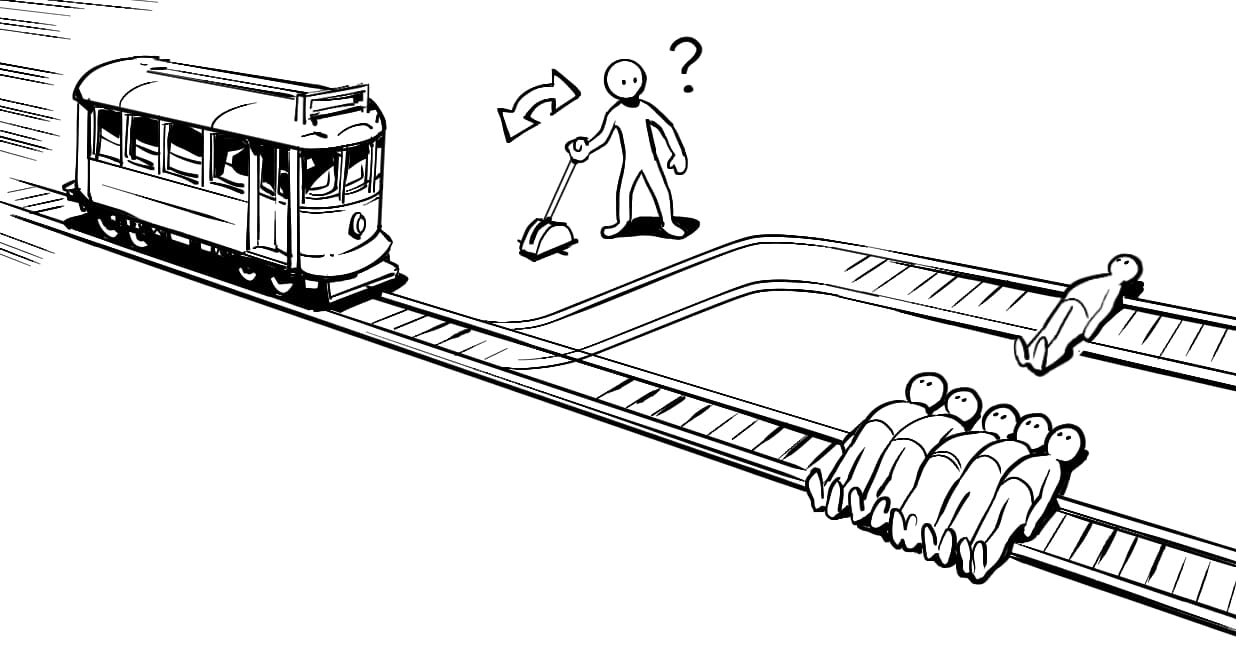
School 2: Deontology (intention is all that matters)
Central principle: An action is morally good if done for the right reason (moral duty), regardless of consequences.
Main defender: Immanuel Kant (1724-1804)
Categorical imperative (Kant)
Kant had a radically different view. For him, morality isn’t about results — it’s about acting from duty, following universal principles.
Categorical imperative (simplified version):
“Act only according to that maxim by which you can at the same time will that it should become a universal law.”
Translation: do something only if everyone could do the same, always, without contradiction.
And more importantly: act out of respect for the moral law, not from inclination, interest, or desire.
Why does Kant reject selfish actions?
Kant makes a crucial distinction:
- Actions in accordance with duty: You do the right thing, but for the wrong reason (fear, interest, pleasure)
- Actions from duty: You do the right thing because it’s right, period
Only the second has genuine moral value.
Applying to our scenarios:
- Philanthropic billionaire: Not morally good ❌ (selfish motive — image/taxes)
- Compassionate politician: Not morally good ❌ (selfish motive — reelection)
- Strategic volunteer: Not morally good ❌ (selfish motive — résumé)
Kant would say: these people did nice things, but not moral things. They acted in accordance with duty, not from duty.
Why does Kant think this way?
Main argument: Morality is about rational autonomy — you act because you recognize it’s right, not because you gain something.
If you only help when it benefits you, you’re not moral — you’re calculating. You’re using reason to maximize self-interest.
A truly moral person helps even when gaining nothing. Even when it hurts. Because they recognize the duty.
Kant’s famous example:
Imagine a merchant who doesn’t cheat customers — but only because he wants good reputation and repeat business.
- Consequentialist: Great! Result is good (customers not cheated).
- Kant: No moral value. He’d be dishonest if he could get away with it. Doesn’t act from principle, acts from strategy.
Main critique of consequentialism
Kant would say consequentialism reduces people to means, not ends.
If you help someone only to feel good, you’re using them for your own satisfaction. They’re a means to your end (feeling virtuous).
Genuine morality treats people as ends in themselves — they have intrinsic value, not instrumental.

School 3: Virtue ethics (character matters more than isolated acts)
Central principle: Morality isn’t about isolated acts — it’s about the type of person you are. Virtues are developed over time, not in single decisions.
Main defender: Aristotle (384-322 BC)
Eudaimonia and virtues (Aristotle)
Aristotle rejected focus on “is this action good?” — thought it was the wrong question. Right question: “What kind of person should I be?”
Life’s goal: eudaimonia (human flourishing, well-lived life). Achieved through virtues — character dispositions cultivated by habit.
Virtues include: courage, generosity, honesty, temperance, practical wisdom (phronesis).
Applying to our scenarios:
Aristotle would ask: “Does this action reflect/develop virtue or vice?”
-
Philanthropic billionaire: Depends. If he genuinely developed generosity as virtue (even if also gaining benefits), has value. If it’s just cynical PR without character development, doesn’t.
-
Compassionate politician: Depends. If she acts from justice (virtue) and reelection is secondary consequence, ok. If acts only for votes, reveals vicious character (excessive ambition).
-
Strategic volunteer: Depends. If volunteering is developing virtue of compassion (even starting from selfish motive), has value. If purely transactional and doesn’t change character, doesn’t.
Why does Aristotle focus on character?
Main argument: Isolated acts don’t define you. Context, motivation, long-term pattern — all matter.
Truly virtuous person:
- Doesn’t do utilitarian calculation every time (too cognitively costly)
- Doesn’t act only from rigid duty (too inflexible)
- Acts naturally, from character disposition cultivated over time
Example: Generous person doesn’t think “I must donate because it’s my duty” or “must calculate utility”. They simply are generous — helping is second nature.
Golden mean
Aristotle famously defended mean between extremes:
| Deficiency (vice) | Virtue (mean) | Excess (vice) |
|---|---|---|
| Cowardice | Courage | Recklessness |
| Stinginess | Generosity | Wastefulness |
| Insensitivity | Temperance | Licentiousness |
| Excessive shyness | Appropriate humility | Vanity |
Moral person isn’t extremist — finds wise balance.
Comparing the three schools
Let’s return to the billionaire philanthropist example and see how each school evaluates:
Question: Is a $10 million donation from self-interest morally good?
| School | Answer | Criterion |
|---|---|---|
| Consequentialism | Yes ✅ | Saved lives, reduced suffering. Motivation irrelevant. |
| Deontology (Kant) | No ❌ | Action not done from duty, but interest. No genuine moral value. |
| Virtue ethics | Depends ⚖️ | If reflects development of generosity (virtue), yes. If pure cynicism, no. |
No theory “wins” — each captures something important:
- Consequentialism: Reminds us results matter. Good intentions without action don’t feed anyone.
- Deontology: Reminds us principles matter. Treating people as means is wrong, even if generates “utility”.
- Virtue ethics: Reminds us character matters. Morality isn’t about isolated acts, it’s about who you become.
Problems with each approach
No theory is perfect. All have objections:
Problems with consequentialism
Problem 1: Permits atrocities if results are good
If torturing one innocent person saved 1,000 lives, consequentialist must approve. Most people find this morally repugnant — there are limits that shouldn’t be crossed, regardless of consequences.
Problem 2: Impossible to calculate all consequences
How to know if action is good if consequences extend infinitely into the future? Butterfly effect makes utilitarian calculation impractical.
Problem 3: Too demanding
If you must always maximize utility, you can never spend money on yourself — there’s always someone in worse situation. Rigorous consequentialism requires extreme sacrifice.
Problems with deontology
Problem 1: Too rigid
Kant believed lying is always wrong, even to save a life. This seems absurd — lying to Nazi about hiding Jews is clearly right.
Problem 2: How to resolve duty conflicts?
If you have duty to “not lie” and duty to “protect innocents”, and they conflict, which to choose? Kant doesn’t give clear method.
Problem 3: Ignores consequences completely
If action done from duty causes massive suffering, does Kant approve? Seems counterintuitive to ignore results totally.
Problems with virtue ethics
Problem 1: Too vague
“Be virtuous” doesn’t give clear guidance in specific dilemmas. What would a courageous and temperate person do upon discovering corruption at work? Depends… but on what?
Problem 2: Cultures disagree about virtues
Some cultures value humility, others value pride. Some value obedience, others autonomy. Who decides what is virtue?
Problem 3: How to develop virtues?
Aristotle says: “practice until it becomes habit”. But what if you were raised in environment that taught vices? How to “deprogram” and start from scratch?

So… which one is right?
Honest answer: No single theory captures all moral truth. Each illuminates a different aspect.
My personal view (and it’s just that — opinion):
I think we need ethical pluralism — use different frameworks in different contexts.
When to use each approach:
Consequentialism:
- Public policy (maximize general welfare)
- Allocation of scarce resources (efficiency matters)
- Emergencies (immediate result > intention)
Deontology:
- Fundamental human rights (there are lines we don’t cross)
- Justice and fairness (treat people as ends, not means)
- Promises and contracts (principle of honoring commitments)
Virtue ethics:
- Personal life (cultivate character)
- Moral education (teach virtues, not rules)
- Relationships (be kind of person friends/family deserve)
No single theory solves all dilemmas. But together? They give more complete perspective.
Questions I had (and the answers)
“If consequentialism is right, why do I feel intention matters?”
Because we evolved in small groups where intention predicted future behavior. If someone helped you only from interest, they’d probably betray you when interest changed. So we have strong intuition about motives. But intuition isn’t philosophical argument — it could be wrong.
“Can I be consequentialist in actions but deontologist in moral judgment?”
Yes! This is common. Many people act to maximize good (consequentialism), but judge people by intentions (deontology). Not necessarily inconsistent — they’re different domains (action vs. evaluation).
“What if I do something good for bad reason, but later develop genuine motivation?”
Aristotle would love this question. For him, that’s how virtue is cultivated — you fake it until you become it. Act generously from selfish motive, but repetition builds habit, and habit shapes character, and eventually you become genuinely generous.
“Is there 100% altruistic action (with no self-benefit)?”
Evolutionary psychologists argue no — even extreme sacrifice brings benefit (status, feeling virtuous, future reciprocity, genetic advantage for relatives). But this is descriptive (how we are), not prescriptive (how we should be). Moral philosophy asks: should be altruistic, not can be.
“Companies doing ‘greenwashing’ (faking sustainability for marketing) — is that good or bad?”
Depends:
- Consequentialist: If actually reduces pollution, good. If just marketing without real action, bad (doesn’t change consequences).
- Kantian: Bad always — uses environmental concern as means to profit, doesn’t act from principle.
- Aristotle: If forces company to develop genuine culture of sustainability, maybe good long-term. If pure cynicism without character change, bad.
Final thoughts (and why this fascinates me)
What gets me about this debate is that all positions are partially right — and that’s precisely why we haven’t resolved it in 2,500 years.
Consequentialism is right that results matter. Dying of hunger because someone had “good intentions” but didn’t act doesn’t solve anything. Pragmatism has value.
Kant is right that treating people as means is degrading. If company only hires Black people to meet quota (not from believing in equality), there’s something morally dubious about that — even if result (more diversity) is good.
Aristotle is right that focus on isolated acts misses the forest for the trees. Person who acts well 99% of the time from genuine character, but errs once, isn’t “immoral” — they’re human.
And maybe we don’t need to choose a single framework. Maybe ethics is multidimensional — consequences and intentions and character matter, in different contexts and measures.
What matters is not falling into simplism:
- “Only intention matters” ignores that real world suffers from good intentions poorly executed
- “Only result matters” opens door to atrocities justified by “greater good”
- “Only character matters” doesn’t give clear guidance in concrete dilemmas
So when I ask “does helping from self-interest count as good?”, honest answer is:
Yes and no. Depends on what you mean by ‘good’. And which ethical framework you adopt. And context. And balance between intention, result, and character.
Not a satisfying answer for those wanting certainty. But philosophy rarely offers certainty. It offers clarity — about what we’re asking, what the options are, and why it’s complicated.
And maybe that’s more valuable.
💡 Summary in 3 points:
- Consequentialism (Mill, Bentham) says: yes, goodness = good results → motivation irrelevant. If selfish donation saves lives, it’s morally good. Problem: permits atrocities if they maximize utility.
- Deontology (Kant) says: no, goodness requires right motive → action is only moral if done from duty, not interest. Selfish action has no genuine moral value, even with good results. Problem: too rigid, ignores consequences.
- Virtue ethics (Aristotle) says: depends on character → matters if action reflects/develops virtues. Selfish motivation that cultivates generosity has value; pure cynicism without character development doesn’t. Problem: vague, no clear guidance.
Enjoyed exploring ethical dilemmas? This post connects with “Can science explain everything?” — where I discuss limits of scientific vs. philosophical knowledge, and why some questions (like this) don’t have empirical answers.
References:
- KANT, Immanuel. Groundwork of the Metaphysics of Morals. 1785.
- MILL, John Stuart. Utilitarianism. 1861.
- ARISTOTLE. Nicomachean Ethics. ~340 BC.
-
Stanford Encyclopedia of Philosophy: Consequentialism plato.stanford.edu
-
Stanford Encyclopedia of Philosophy: Kant’s Moral Philosophy plato.stanford.edu
- SINGER, Peter. The Life You Can Save. Random House, 2009.
-
Internet Encyclopedia of Philosophy: Virtue Ethics iep.utm.edu
Personal note: Got curious about care ethics — feminist strand that rejects both consequentialism and deontology, focusing on relationships and context. Carol Gilligan argues traditional frameworks (Kant, Mill) are too masculine, privilege abstract reason over emotion and connection. Would it be a fourth ethical school? Material for future post about relational ethics vs. principle ethics.